

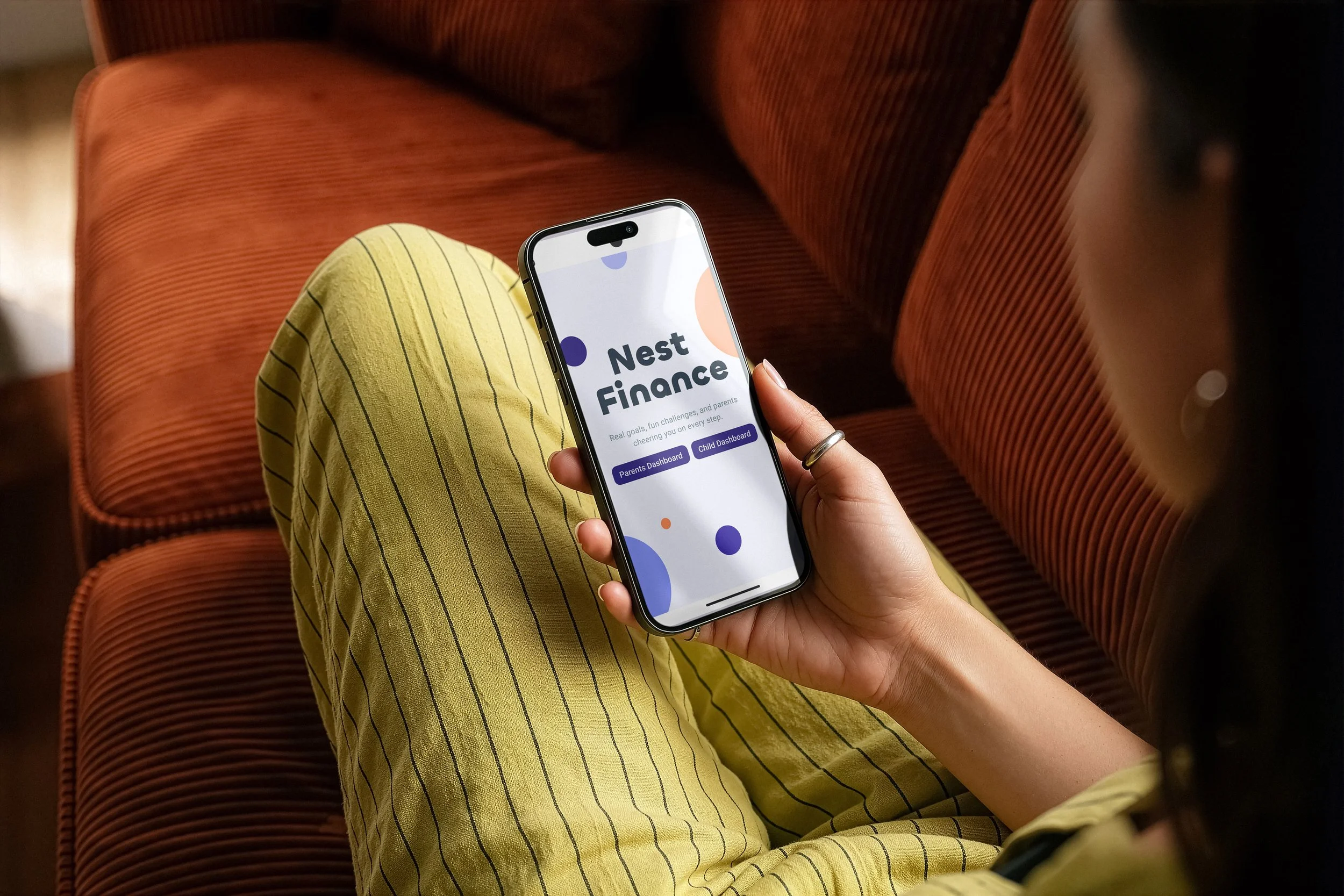
Nest Finance
Role
UX/UI Designer I
Concept
Tools

OVERVIEW & CONTEXT
This project began with a pattern I noticed during conversations with parents of tweens and teenagers.
Many described the same challenge: their children were becoming increasingly independent, using smartphones, making online purchases, and wanting more control over their own money. Parents wanted to support that independence, but were concerned about impulsive spending and a lack of financial literacy.
While some families provided cash allowances, others transferred money manually through banking apps. In both cases, parents lacked meaningful ways to teach money management beyond setting rules or monitoring transactions.
How might we help parents gradually hand over financial responsibility while still providing guidance and oversight?
BUSINESS GOAL
Increase family engagement by turning banking from a transaction tool into a financial coaching platform. Turn a banking experience into a behavioural change opportunity.
OBSERVATIONS
Existing family banking experiences are built around control and visibility, not behavior change.
As a result:
Parents primarily use banking apps only for allowance transfers
Teens rarely engage beyond checking balances
Financial conversations happen outside the product
There is little support for habit formation or learning
From observed patterns:
~60–70% of allowance activity is manual, recurring transfers
<20% of teens open their banking app weekly
~40% of youth accounts show minimal engagement after onboarding
Family banking behaves like a utility, not a learning system.
DESIGN PRINCIPLES
1.
Shared ownership over financial decisions
Not parent control or child autonomy, but collaboration.
2.
Learning through real behavior
Financial education should emerge from actions, not explanations.
3.
Visibility without surveillance
Families should understand patterns, not monitor every transaction.
SOLUTION RATIONALE
The solution was designed around a central idea: helping families build healthy financial habits through coaching rather than control. Research and market analysis suggested that while parents wanted visibility into their children's financial behavior, excessive monitoring could undermine teens' sense of independence. To address this tension, Nest combines parental oversight with teen ownership through separate dashboards, shared goals, and collaborative challenges. Instead of relying on traditional financial education content, the experience encourages learning through action by making saving, spending, and goal-setting visible and rewarding. Features such as challenges, milestones, and progress tracking were intentionally designed to reinforce positive behaviors over time, transforming financial management into an ongoing family learning experience rather than a series of isolated transactions.
Several design decisions were guided by balancing competing needs: visibility without surveillance, guidance without control, and engagement without excessive gamification. By framing parents as coaches rather than supervisors, the product encourages trust and autonomy while still providing the structure needed to develop long-term financial habits. This approach informed every aspect of the experience, from the dual-dashboard system to the goal-based challenges and family milestones.
EXPECTED IMPACT
By reframing family banking as a coaching system, the product aims to shift engagement from transactional to behavioral.
Expected outcomes:
Higher weekly engagement among teens
Increased savings goal participation
More frequent family interactions within the app
Improved long-term retention in family accounts
Metric targets:
Monthly active family accounts: 32% → 50%+
Teen weekly engagement: ~15% → 35–45%
Savings goal creation: ~10% → 40%+
12-month retention: 58% → 75%
OPPORTUNITY AREA
If family accounts currently average ~2–3 meaningful interactions per user per month (mostly transfers), there is a significant gap for engagement-driven behaviors.
If even:
30% of families created monthly savings goals
25% of teens completed weekly challenges
40% increase in app visits driven by progress tracking
This would meaningfully shift the product from a low-frequency utility to a high-engagement financial habit platform.
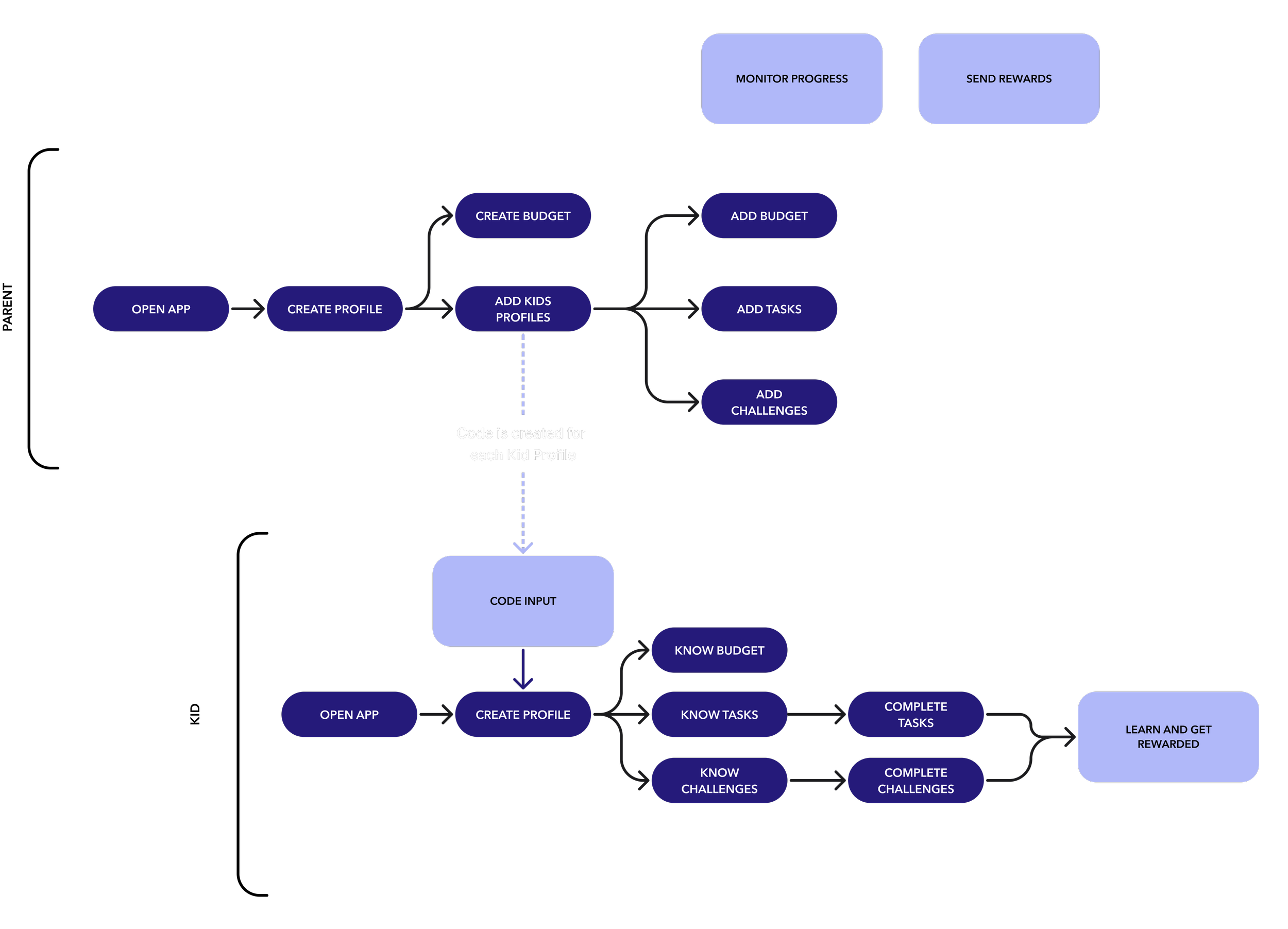
FLOWS
BEHAVIOURAL LOOP
The system is designed around a simple loop:
Parent defines structure (allowance + rules)
Teen engages through goals and challenges
Behavior is tracked and reflected back
Progress reinforces motivation
Family reinforces through shared milestones
Over time, this builds financial habits rather than isolated actions.
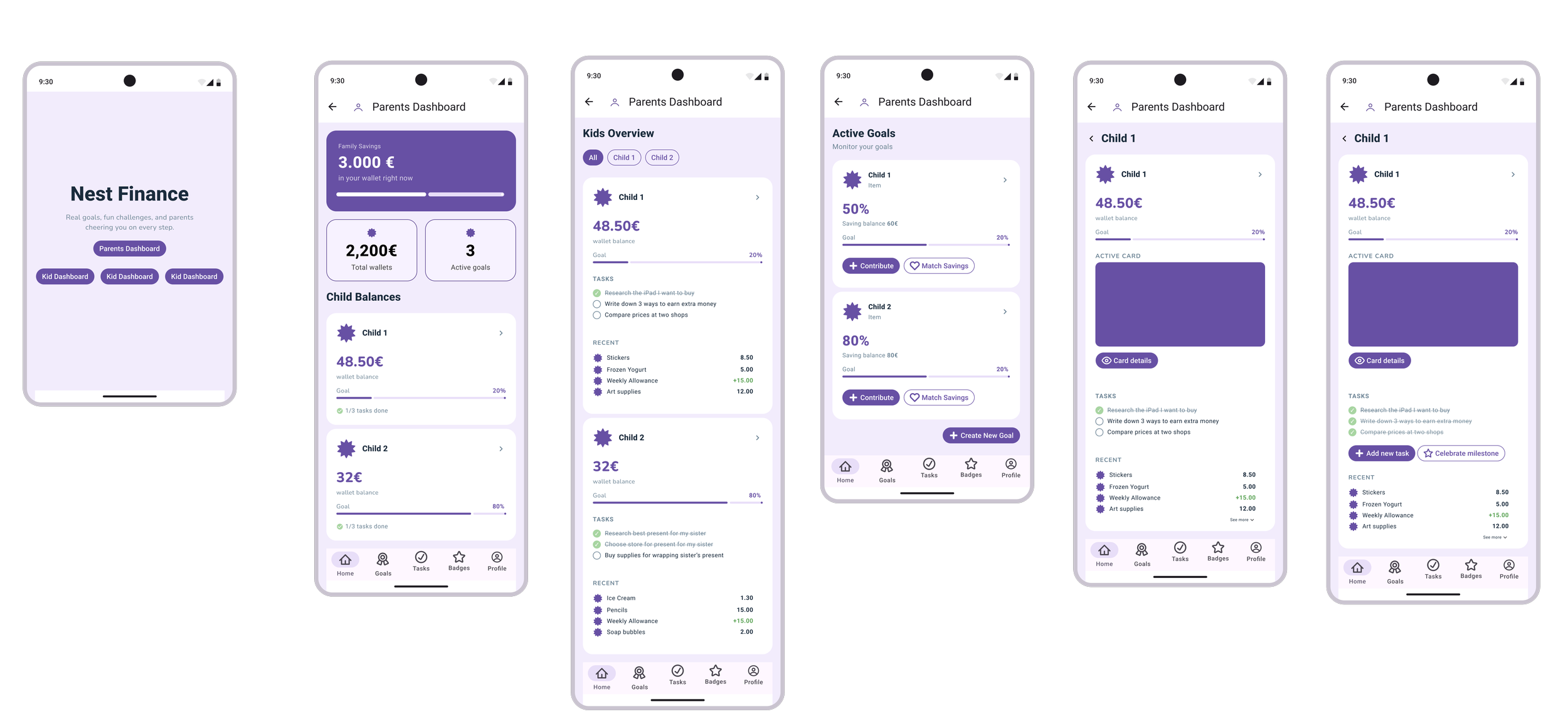
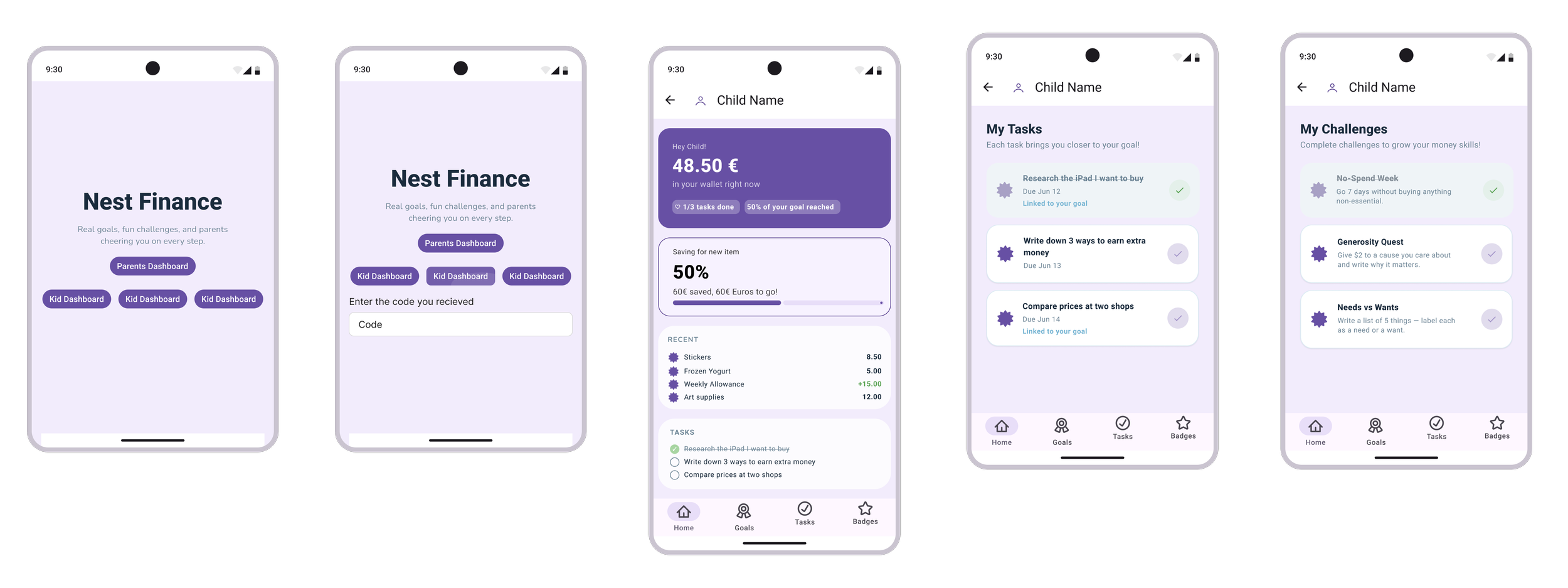
Wireframes
REFINEMENT & PSYCHOLOGICAL IMPACT
Banking interfaces are often perceived as complex, formal, and oriented toward adult financial management, which can make them intimidating for younger users and less engaging for families. Nest addresses this by shaping both the interaction model and the visual language to feel more approachable and supportive, encouraging financial learning through familiarity rather than pressure.
A softer visual system, using rounded typography and a playful color palette, helps reduce the perceived distance between users and financial tools, making the experience feel less transactional and more personal. This choice is intended to lower emotional barriers and create a sense of safety and accessibility for teens and tweens engaging with money for the first time.
Tasks and challenges translate financial habits into actionable, repeatable experiences, allowing users to understand the consequences of their choices over time rather than in isolated moments. By surfacing these activities on the home screen, they function both as daily responsibilities and motivational nudges, reinforcing consistent engagement.
Progress is reinforced through badges and parental recognition, while separating challenges into a dedicated space allows users to reflect on their learning journey, track improvement over time, and build a sense of accomplishment.
Final designs
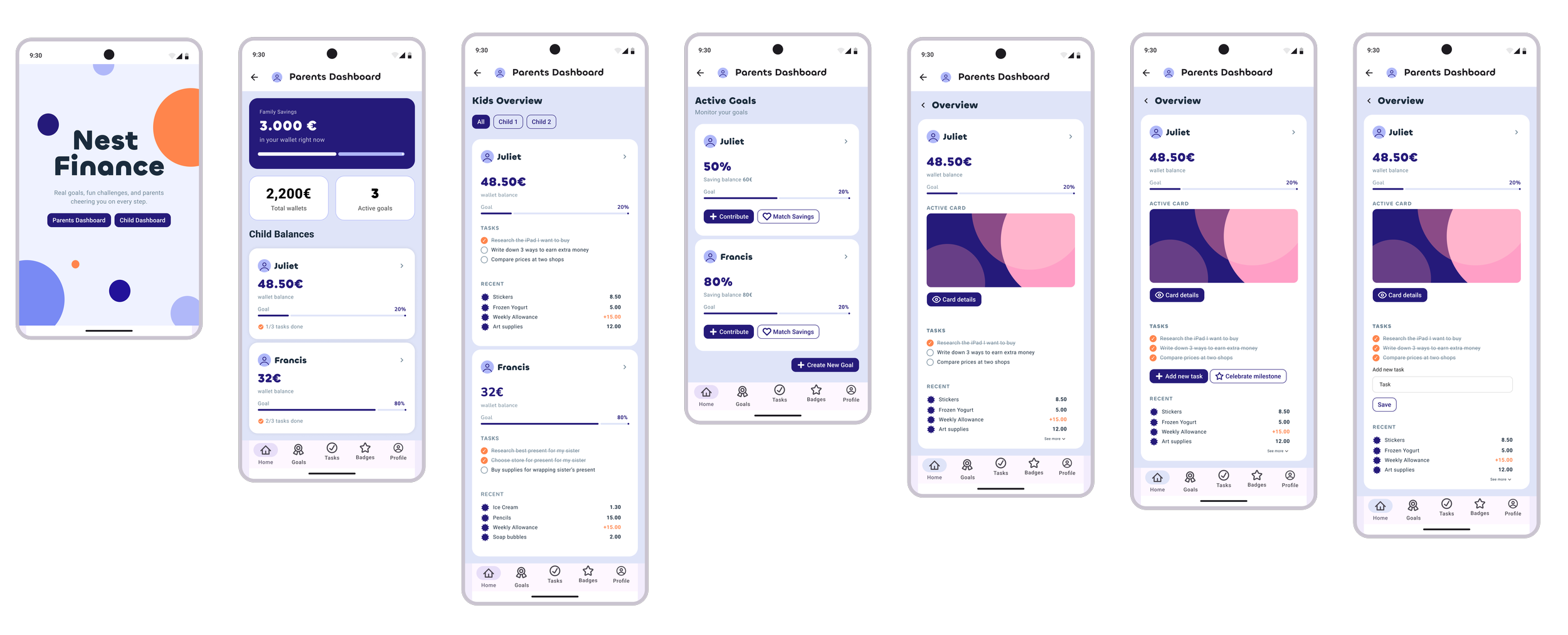
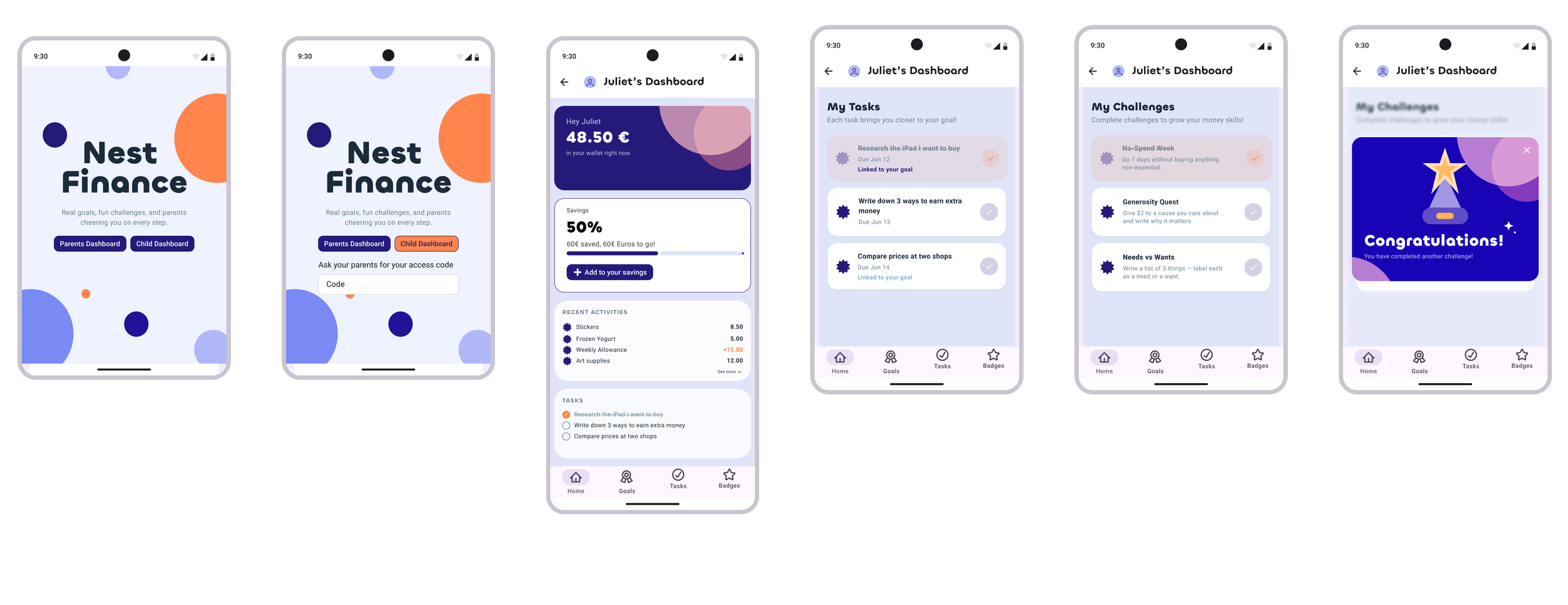
SEPARATE DASHBOARDS
Parents have the possibility of always having an overview of the children’s spending, movements and savings, but also their progress.
The kids have the possibility of feeling free to use their budget, see their progress, complete challenges and get rewards.
This increases their knowledge and responsability, and guarantees to the parents safety but also freedom to let their kids learn in a safe environment.
INDEPENDENCE
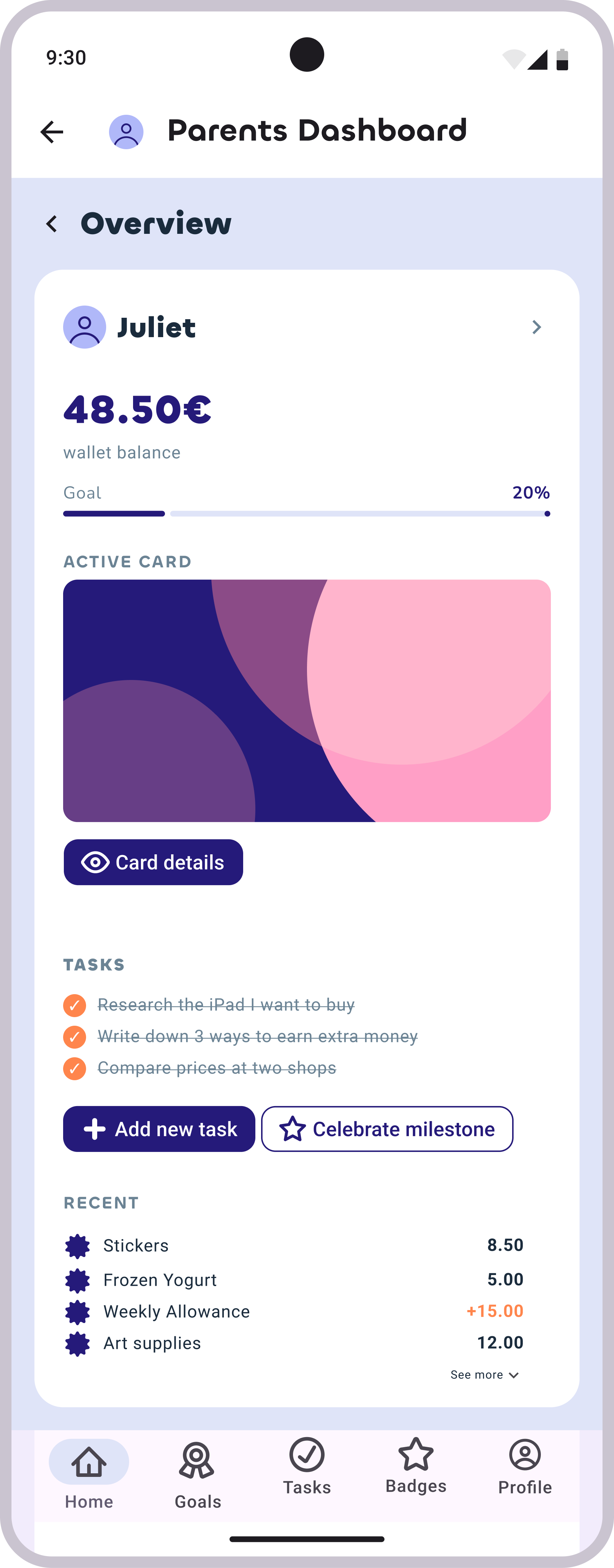
While parents can set goals and challenges, the kids are encouraged to complete them but also can have a clear overview of their progress, spending and savings.
This, together with the personal card each one of them can have, allows them to feel responsable and independent, associating a safe and positive meaning to banking.
POSITIVE REINFORCEMENT
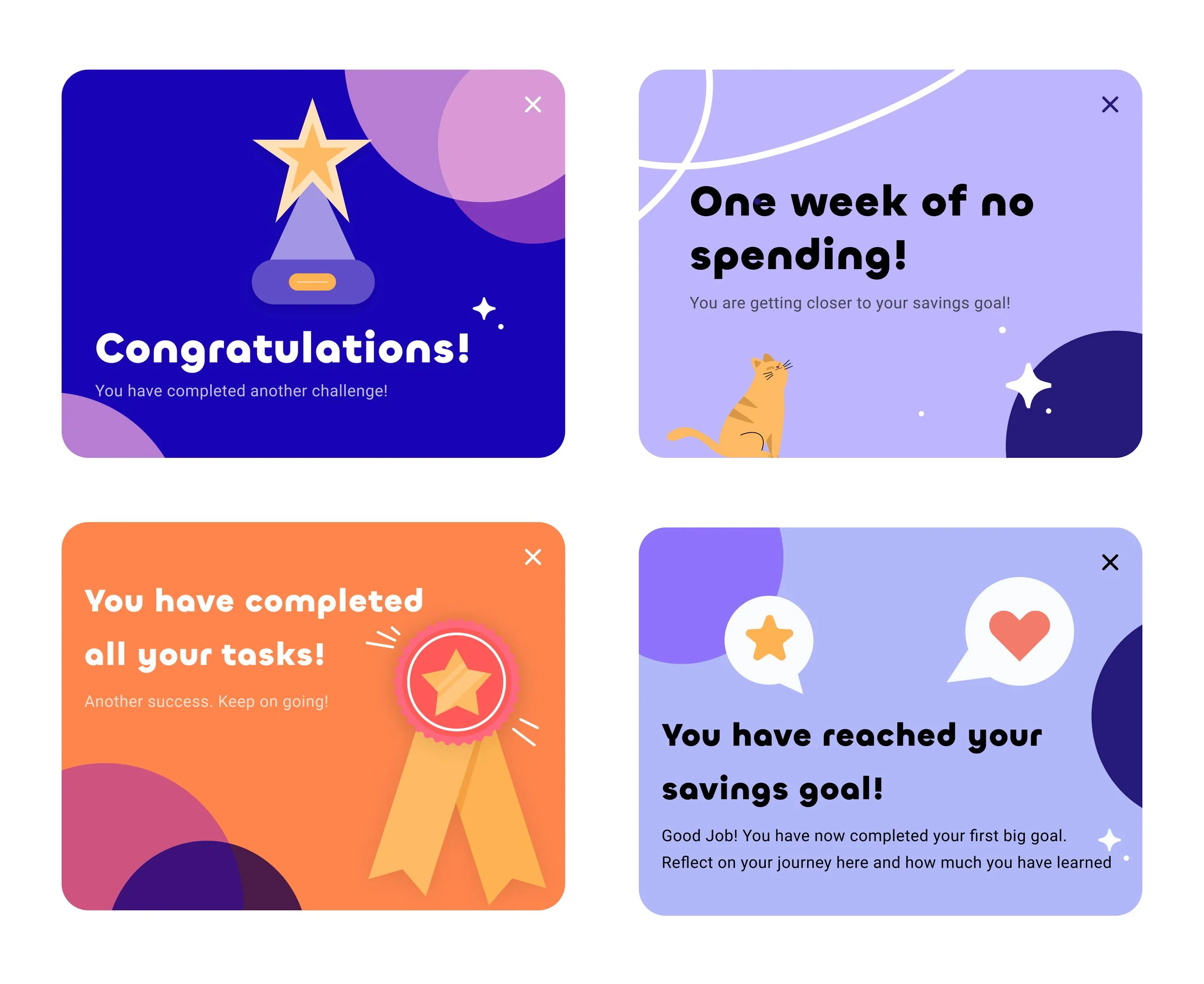
Badges help reinforcing positive associations between behaviours and money spending, saving and understanding.
They are triggered automatically when a task is completed and can be prompted by a parent.
FINAL CoNSIDERATIONS
This project explores a shift in perspective:
From controlling money → to coaching financial behavior.
By designing for shared understanding instead of oversight, banking can become a tool that helps families build long-term financial independence together.
*All the data present in this project are hypothetical metrics used to frame opportunity